Skip to content
MovieCove
Star Trek: Strange New Worlds

Star Trek: Strange New Worlds

Boldly go one step closer to where it all began.

2022–2027Ended4 seasonsRenewedSeason 5 upcoming46 episodes~52 min/epTV-PGMidcredits score: 87th percentile of all shows

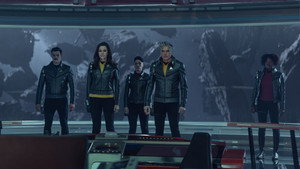
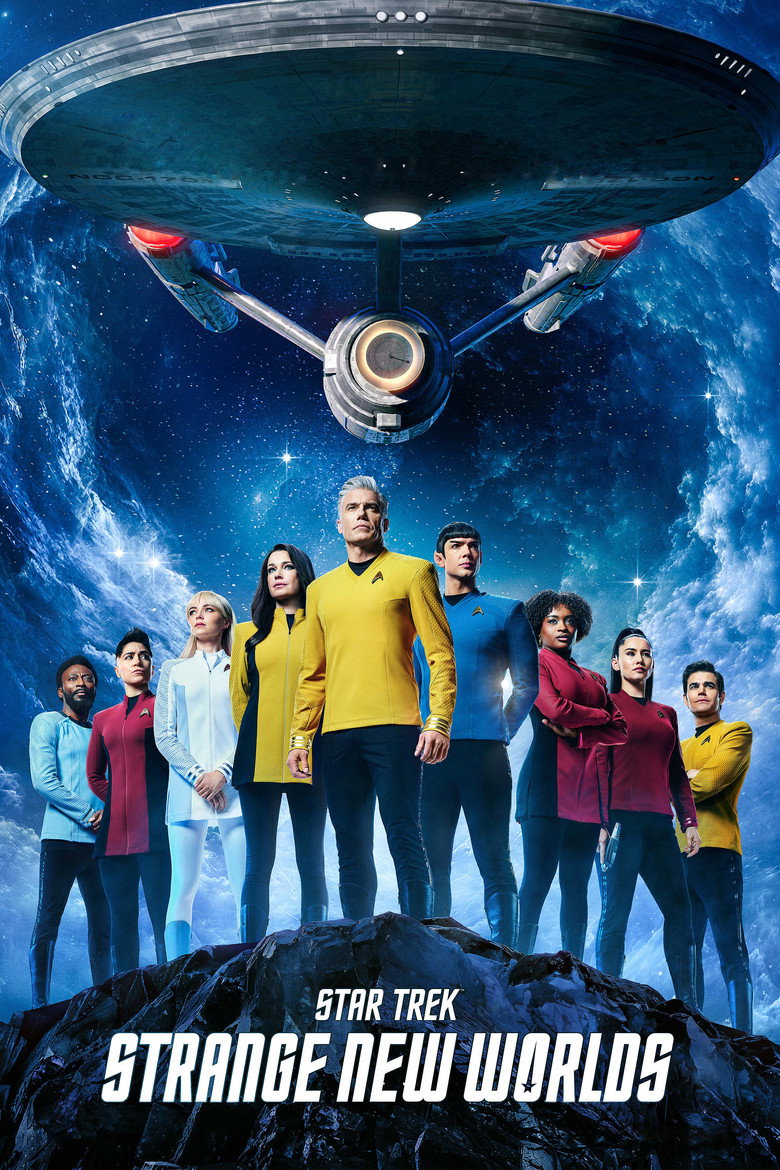
Follow Captain Christopher Pike, Science Officer Spock and Number One in the years before Captain Kirk boarded the U.S.S. Enterprise, as they explore new worlds around the galaxy.

Your rating, lists and review

Where can I watch Star Trek: Strange New Worlds?

As of October 24, 2026, MovieCove lists Star Trek: Strange New Worlds streaming on Paramount+ and to rent or buy on Apple TV and Prime Video.

Subscription

Rent / Buy

What stands out about Star Trek: Strange New Worlds?

Star Trek: Strange New Worlds earns 5 badges, led by Top 10% of the 2020s and Spectacle.

  • Rank
  • Reception
  • Craft and mood

Is Star Trek: Strange New Worlds worth watching?

Star Trek: Strange New Worlds' Midcredits score is the 87th percentile of all shows, from 88K ratings across 5 sources. 86% liked it (rated it 7 or higher out of 10).

Midcredits score

How well it was received

87th percentile

Better received than 87% of shows

84th percentile among Action90th percentile among 2020s
Acclaim (how much people like it)84th
Approval (how many liked it)85th

Acclaim

Crowd Pleaser: Rating-distribution shape vs the catalog

How much people like it

79 /100

84th percentile of all shows

84th percentile among Action87th percentile among 2020s

Critics 77 · Audience 79

Critics and audiences broadly agree.

Rating distribution

Most people land high, with a thin tail of low scores from those it didn't reach.

Approval

How many liked it

86% liked it

85th percentile of all shows

80th percentile among Action88th percentile among 2020s
86% rated it 7–1014% rated it 1–6

Critics 92% · Audience 64%

On Rotten Tomatoes, a bigger share of critics approved than audiences.

Reach

How many have seen it

97th percentile

87K ratings across platforms

88th percentile among Action98th percentile among 2020s
TMDB popularity, last 155 days to Oct 26Down 30% in 30 days

What reviewers say

Common ground

The show's first two seasons successfully revived classic Trek's episodic, optimistic formula, but later seasons alienated many with gimmicks, romance over plot, and inconsistent writing.

Fans praised

  • Return to classic episodic storytelling with self-contained adventures
  • Optimistic tone and genuine Star Trek spirit (morality, exploration, philosophy)
  • Strong cast chemistry led by charismatic Anson Mount as Pike and Ethan Peck's Spock

Detractors panned

  • Became gimmick-heavy (musical, puppets, black-and-white episodes) abandoning sci-fi core
  • Soap opera romance subplots dominate at expense of exploration and science
  • Inconsistent writing quality: shallow characters, plot holes, forced social messaging

What stands out

Effects and spectacle82

High-quality CGI, impressive production values, big-budget movie feel

Cinematography80

Stunning visuals, retro-modern sets, cinematic feel

ActingDivisive75

Cast praised as excellent and likable; some called stiff or miscast (e.g., Kirk)

CharactersDivisive65

Fans love Pike, Spock, Chapel; critics call shallow, overly emotional, or lacking depth

AtmosphereDivisive65

Nostalgic optimism praised; later seasons criticized as lacking wonder or exploring new worlds

Plot and storyDivisive55

First seasons praised for episodic morality tales; later seasons criticized as thin, incoherent, or silly

DialogueDivisive55

Praised for witty and philosophical at best; panned as amateurish, forced, or expository

OriginalityDivisive45

Praised for fresh yet faithful update; criticized for reliance on gimmicks and tired tropes

Preferred by

Under-30s vs over-30s

Preferred by Over-30s

Over-30s scored it 27 points higher than under-30s.

No notable difference between the other groups: each pair ranks it within 10 percentile points.

  • Women vs men 7 points apart
  • Critics vs users 3 points apart
  • US vs non-US 5 points apart

Episodes

4 seasons

Season 4 · 2026 · 10 episodes · 6.8 average across 10 rated episodes

  • S4E1

    Valles Marineris

    Jul 23, 202659 minTMDB rating 7.1
  • S4E2

    The Griffin Incident

    Jul 30, 202659 minTMDB rating 6.4
  • S4E3

    Human Best Friend

    Aug 6, 202648 minTMDB rating 6.7
  • S4E4

    A Case of Chiaroscuro

    Aug 13, 202651 minTMDB rating 6.6
  • S4E5

    Level-Five Transporter Accident

    Aug 20, 202655 minTMDB rating 6.7
  • S4E6

    Off-Hour

    Aug 27, 202657 minTMDB rating 7.5

What is Star Trek: Strange New Worlds like to watch?

Conclusions only — categories and positions, no plot detail.

Earnest, light and charged — an even-paced watch that leaves you hopeful.

ToneFeelDemandexact position · filled zone: the category

What it feels like

Moods
ContemplativeHopefulTense
Heaviest: early
Wry humor: Amused and slightly dry about it.
Register
Adventurous · 15% of showsWarm
Told as
Three-act: Setup, confrontation, resolution — the default Hollywood shape.Case of the week plus an arcNew arc each season
ToneThe series plays its optimistic Starfleet mission straight with moments of playful experimentation, especially in later seasons.
The rideThe series blends thoughtful exploration and optimism with moments of danger; the most serious and well-regarded seasons are the early ones, while later seasons become lighter and more romantic.
StructureEpisodes follow a traditional three-act structure with self-contained plots, consistent with the show's episodic format.
Episode formatThe show features mostly self-contained episodes (missions to new worlds) that are increasingly threaded with ongoing character and romance arcs across seasons.
Season formatEach season follows the same core crew but develops a distinct thematic or story arc (e.g., early exploration focus, later romantic and character-driven drama).

How it leaves you

what you carry away
HopefulFun
Why it leaves you this wayThe series reinforces Star Trek's core optimism and sense of wonder, though its inconsistent later seasons leave a slightly tempered impression.
How it ends · evidence
Bittersweet ending

Story archetype

where it sits among all shows
Monster — 18% of shows. A threat menaces the hero's world and must be defeated.Rags — 3% of shows. A rise from lowliness to fortune, status, or recognition.Quest — 6% of shows. A journey toward a defined objective, with companions and obstacles.Voyage — 2% of shows. Into a strange world and back again, changed.Comedy — 12% of shows. Confusion and cross-purposes resolved into harmony.Tragedy — 4% of shows. A flaw or fixation drives the protagonist to ruin.Rebirth — 7% of shows. A stalled or darkened life reopened and renewed.Mystery — 8% of shows. A question drives the story — who did it, what happened, what is real — until it is answered.No archetype — 40% of showsPredator — 7% of shows. A creature or killer hunts the protagonists (Jaws, Alien).Tyrant — 3% of shows. A human villain holds power over the hero's world (Die Hard).Invasion — 2% of shows. An external force attacks the home or world (Independence Day).Oppressive state — 3% of shows. A government, its agencies or a secret faction inside them is the monster (V for Vendetta).Corporate villainy — 1% of shows. A company or its bosses are the monster (Erin Brockovich).Institutional injustice — 1% of shows. A court, prison, police force, school or church is itself the enemy (Spotlight).Class system — under 1% of shows. The gap between rich and poor, or a rigid hierarchy, is the monster (Parasite).Technology turns — under 1% of shows. Technology people rely on becomes the threat (The Terminator).Inner demon — 1% of shows. The monster is within — addiction, illness, a dark double.Underdog triumph — 2% of shows. Rise through competition or contest (Rocky).Social ascent — 1% of shows. A climb in class or status (Pretty Woman).Fame and fortune — under 1% of shows. An artistic or showbiz rise (A Star Is Born).Rise and fall — under 1% of shows. Wealth or power gained, self lost (Scarface).Hidden worth revealed — under 1% of shows. The protagonist's true value finally recognized.Treasure hunt — 1% of shows. Retrieve an object of value (Raiders of the Lost Ark).Rescue — 2% of shows. Retrieve or save a person (Saving Private Ryan).Mission — 4% of shows. Accomplish or destroy a defined objective (Mission: Impossible).Journey home — under 1% of shows. The goal is getting back (Finding Nemo).Pilgrimage — under 1% of shows. The journey itself transforms; the destination is symbolic.Portal fantasy — under 1% of shows. Transported into another world (The Wizard of Oz).Fish out of water — 1% of shows. Displaced into an unfamiliar social world (Elf).Survival ordeal — under 1% of shows. Trapped in a hostile environment, fighting back (Cast Away).Time displacement — under 1% of shows. Unstuck in time (Back to the Future).Descent — under 1% of shows. A night-journey into an underworld or subculture (After Hours).Romantic comedy — 2% of shows. Lovers kept apart by confusion, united at last.Comedy of errors — 3% of shows. Mistaken identity or misunderstanding drives the plot.Farce — 2% of shows. Escalating absurd chaos and coincidence (The Hangover).Buddy comedy — 1% of shows. A mismatched pair forced together (Rush Hour).Comedy of manners — 2% of shows. Social codes and class satirized (Clueless).Hubris — 1% of shows. Pride or ambition invites the fall (There Will Be Blood).Obsession — under 1% of shows. A fixation consumes the protagonist (Black Swan).Corruption arc — 1% of shows. Step-by-step moral decay (The Godfather).Doomed love — 1% of shows. Love destroyed by circumstance (Brokeback Mountain).Crushed by fate — 1% of shows. Destroyed by forces beyond the protagonist's control.Redemption — 1% of shows. Moral reawakening of a hardened soul (A Christmas Carol).Healing — 3% of shows. Recovery from grief or trauma (Good Will Hunting).Liberation — 2% of shows. Breaking free of a confining life (Room).Second chance — 1% of shows. A stagnant life re-opened to love or purpose (Groundhog Day).Puzzle — 1% of shows. A clue-by-clue puzzle you can try to solve before the reveal (Knives Out, Clue).Investigation — 6% of shows. A long pursuit of the truth that may never be fully solved (Zodiac, Memories of Murder).Enigma — 1% of shows. The mystery is what is real, or what is actually happening (Mulholland Drive).MonsterPredator
Every story archetype, clockwise from the top
  • Monster 18% (this title): Predator 7% (this title) · Tyrant 3% · Invasion 2% · Oppressive state 3% · Corporate villainy 1% · Institutional injustice 1% · Class system under 1% · Technology turns under 1% · Inner demon 1%
  • Rags 3%: Underdog triumph 2% · Social ascent 1% · Fame and fortune under 1% · Rise and fall under 1% · Hidden worth revealed under 1%
  • Quest 6%: Treasure hunt 1% · Rescue 2% · Mission 4% · Journey home under 1% · Pilgrimage under 1%
  • Voyage 2%: Portal fantasy under 1% · Fish out of water 1% · Survival ordeal under 1% · Time displacement under 1% · Descent under 1%
  • Comedy 12%: Romantic comedy 2% · Comedy of errors 3% · Farce 2% · Buddy comedy 1% · Comedy of manners 2%
  • Tragedy 4%: Hubris 1% · Obsession under 1% · Corruption arc 1% · Doomed love 1% · Crushed by fate 1%
  • Rebirth 7%: Redemption 1% · Healing 3% · Liberation 2% · Second chance 1%
  • Mystery 8%: Puzzle 1% · Investigation 6% · Enigma 1%
  • No archetype 40%

Overcoming the monster: A threat menaces the hero's world and must be defeated. · Predator: A creature or killer hunts the protagonists (Jaws, Alien).

18% of shows fit this archetype

A loose fit — the map only half-holds this one.

Why this archetypeThe typical episode sends the Enterprise crew to a new world where they confront a mysterious threat or solve a puzzle, often involving first contact with an alien species or a dangerous phenomenon.

What it's about

7 groups · 53 themes
Bonds — 31% of showsSelf — 27% of showsPower — 7% of showsMorality — 11% of showsSurvival — 9% of showsSociety — 10% of showsIdeas — 5% of showsRomantic love — 10% of showsMarriage — 2% of showsFamily bonds — 22% of showsParenthood — 1% of showsFriendship — 18% of showsLoyalty — 7% of showsIdentity — 20% of showsComing of age — 9% of showsAging — under 1% of showsSelf-worth — 7% of showsAmbition — 14% of showsPurpose — 16% of showsMemory — 3% of showsObsession — 2% of shows. A fixation consumes the protagonist (Black Swan).Power — 5% of showsCorruption — 3% of showsGreed — 2% of showsClass — 4% of showsOppression — 2% of showsFreedom — 4% of showsJustice — 14% of showsDuty — 2% of showsRevenge — 1% of showsGuilt — 1% of showsRedemption — 3% of shows. Moral reawakening of a hardened soul (A Christmas Carol).Forgiveness — under 1% of showsSacrifice — 2% of showsBetrayal — 3% of showsDeception — 6% of showsSurvival — 12% of showsWar — 1% of showsViolence — 2% of showsMortality — 2% of showsGrief — 4% of showsTrauma — 5% of showsMental illness — under 1% of showsAddiction — under 1% of showsIllness and disability — under 1% of showsCommunity — 25% of shows. Consequences reach a town, institution or group.Isolation — 3% of showsPrejudice — 2% of showsDisplacement — 1% of showsFaith — 1% of showsTradition vs change — 3% of showsFame — 5% of showsLegacy — 3% of showsFate — 1% of showsFree will — under 1% of showsTruth — 6% of showsHope — 4% of showsNature — 3% of showsArt — 2% of showsTechnology — 1% of showsSelfFriendship
Every theme, clockwise from the top
  • Bonds 31% (this title): Romantic love 10% · Marriage 2% · Family bonds 22% · Parenthood 1% · Friendship 18% (this title) · Loyalty 7%
  • Self 27%: Identity 20% · Coming of age 9% · Aging under 1% · Self-worth 7% · Ambition 14% · Purpose 16% (this title) · Memory 3% · Obsession 2%
  • Power 7%: Power 5% · Corruption 3% · Greed 2% · Class 4% · Oppression 2% · Freedom 4%
  • Morality 11%: Justice 14% · Duty 2% · Revenge 1% · Guilt 1% · Redemption 3% · Forgiveness under 1% · Sacrifice 2% · Betrayal 3% · Deception 6%
  • Survival 9%: Survival 12% · War 1% · Violence 2% · Mortality 2% · Grief 4% · Trauma 5% · Mental illness under 1% · Addiction under 1% · Illness and disability under 1%
  • Society 10%: Community 25% (this title) · Isolation 3% · Prejudice 2% · Displacement 1% · Faith 1% · Tradition vs change 3% · Fame 5% · Legacy 3%
  • Ideas 5%: Fate 1% · Free will under 1% · Truth 6% · Hope 4% · Nature 3% · Art 2% · Technology 1%

Bonds

FriendshipPurposeCommunity: Consequences reach a town, institution or group.
Celebrates its theme: Affirms its theme — this is good and worth having.Global stakes: Consequences reach the world.Ensemble lead
How it treats its themeThe series centers on the crew of the Enterprise as a found family, exploring their relationships, growth, and commitment to exploration and each other.
StanceThe series affirms the value of friendship, community, and exploration, presenting Starfleet's mission as worthwhile and its crew's bonds as its strength.

The world

Far futureOuter spaceInstitutionalScience fiction
Orchestral classicalOrchestral modernSupportive music · original score · Nami Melumad
SettingStarship USS Enterprise exploring the galaxy in the 23rd century
MusicThe score updates classic Star Trek themes with a modern orchestral sound, balancing homage with freshness.

Is Star Trek: Strange New Worlds okay for kids?

TV-PG

Star Trek: Strange New Worlds is rated TV-PG. As of October 5, 2026, Midcredits content scores put its violence at moderate (50/100), sexual content at mild (29/100), language at mild (26/100), drug and alcohol content at mild (32/100) and frightening material at moderate (48/100). Overall it is heavier than 64% of TV-PG shows.

Ratings in 13 other countries
  • UK15
  • Canada18+
  • AustraliaMA 15+
  • Germany16
  • Ireland15
  • South Korea12
  • Brazil14
  • Austria16
  • FinlandK12
  • MexicoB
  • RO12
  • Russia18+
  • Spain12
Overall
Moderate · all five categories
Heavier than 26% of all showsHeavier than 64% of TV-PG shows
Violence & Gore
Moderate
typical for a TV-PG show
heavier than 73%
Sex & Nudity
Mild · audience split: No severity level holds a majority of voters
typical for a TV-PG show
heavier than 50%
Profanity
Mild
typical for a TV-PG show
heavier than 39%
Alcohol & Drugs
Mild
typical for a TV-PG show
heavier than 56%
Frightening / Intense
Moderate
typical for a TV-PG show
heavier than 69%

Point along a line to see a well-known title at that level.

Nothing here is extreme. The strongest element is violence, heavier than 73% of TV-PG shows.

Source: Midcredits content scores, 0 (none) to 100 (severe) per category, with each standing ranked against other shows that have them.

What content warnings does Star Trek: Strange New Worlds have?

MovieCove's classifier found 5 depicted content warnings in Star Trek: Strange New Worlds: Self-harm (moderate), plus 4 withheld here because they would spoil the plot. Each is backed by a verbatim quote from the parents' guide notes; a missing warning is not a guarantee of absence.

ModerateSelf-harm

Who is in Star Trek: Strange New Worlds?

What are shows like Star Trek: Strange New Worlds?

TMDB's suggestions for shows like Star Trek: Strange New Worlds include Star Trek: Deep Space Nine (1993), Stargate Universe (2009) and Andromeda (2000).

Like this, but

What other shows share a tag with Star Trek: Strange New Worlds?

58 other shows share the rarest tag below, premise: first contact. Each tag opens Browse with the shows that share it.