Skip to content
MovieCove
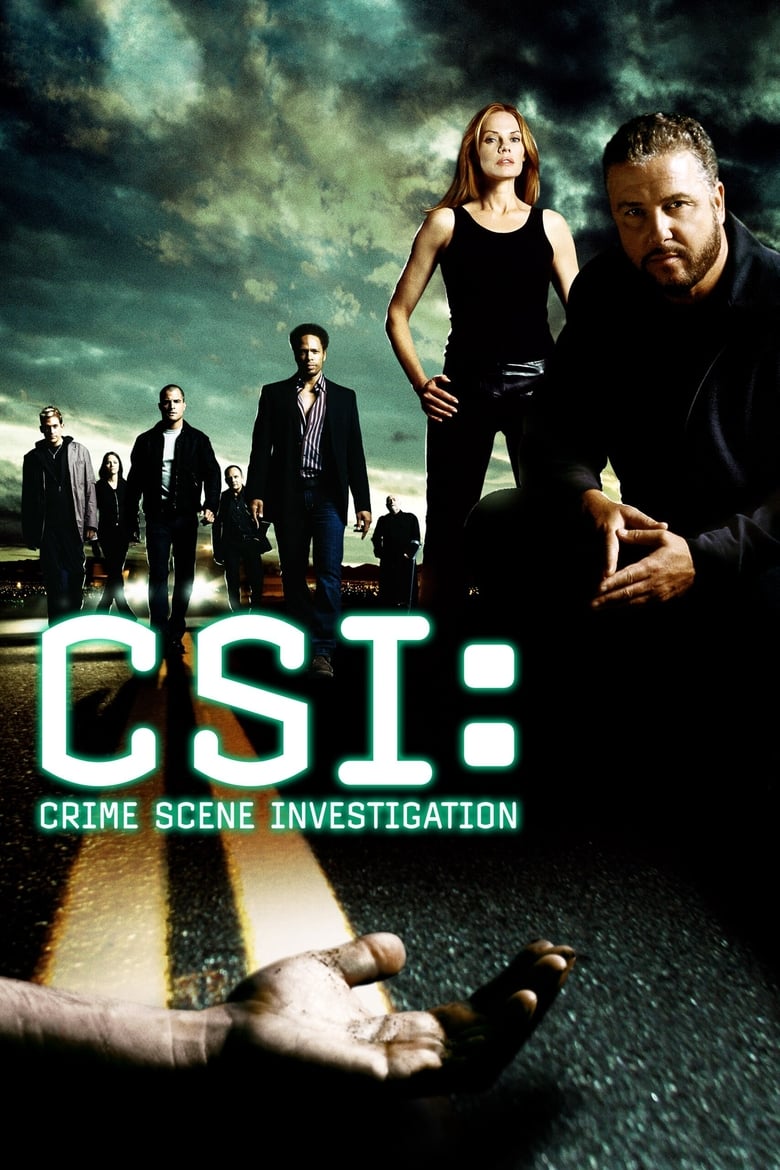
CSI: Crime Scene Investigation

CSI: Crime Scene Investigation

2000–2015Ended15 seasons335 episodes~60 min/epTV-14Midcredits score: 80th percentile of all shows

A Las Vegas team of forensic investigators are trained to solve criminal cases by scouring the crime scene, collecting irrefutable evidence and finding the missing pieces that solve the mystery.

Your rating, lists and review

Where can I watch CSI: Crime Scene Investigation?

As of October 24, 2026, MovieCove lists CSI: Crime Scene Investigation streaming on Hulu, Paramount+, Pluto TV (free) and The Roku Channel (free) and to rent or buy on Apple TV and Prime Video.

Subscription

Rent / Buy

What stands out about CSI: Crime Scene Investigation?

CSI: Crime Scene Investigation earns 5 badges, led by Award-winning performances and Crowd Pleaser.

  • Reception
  • Craft and mood
  • Cast

Is CSI: Crime Scene Investigation worth watching?

CSI: Crime Scene Investigation's Midcredits score is the 80th percentile of all shows, from 97K ratings across 2 sources. 83% liked it (rated it 7 or higher out of 10).

Midcredits score

How well it was received

80th percentile

Better received than 80% of shows

79th percentile among Crime75th percentile among 2000s
Acclaim (how much people like it)77th
Approval (how many liked it)79th

Acclaim

Crowd Pleaser: Rating-distribution shape vs the catalog

How much people like it

77 /100

77th percentile of all shows

79th percentile among Crime71st percentile among 2000s

Rating distribution

Most people land high, with a thin tail of low scores from those it didn't reach.

Approval

How many liked it

83% liked it

79th percentile of all shows

72nd percentile among Crime74th percentile among 2000s
83% rated it 7–1017% rated it 1–6

Reach

How many have seen it

98th percentile

95K ratings across platforms

97th percentile among Crime96th percentile among 2000s
TMDB popularity, last 37 days to Oct 26Down 23% in 30 days

What reviewers say

Common ground

Both camps agree the show prioritizes thrilling, high-tech forensic spectacle over realistic police procedure.

Fans praised

  • Grissom's witty philosophical asides and character depth
  • groundbreaking focus on science and forensic procedure as drama
  • distinctive neon-noir visual style and color palette

Detractors panned

  • CSI agents doing detective and arrest work far beyond real-life role
  • ludicrously accelerated lab results and magical computer enhancements
  • formulaic structure: every episode resolves via a single implausible clue

What stands out

OriginalityDivisive82

Pioneered the forensic procedural genre; later seasons felt derivative and self-repeating

CinematographyDivisive82

Slick, moody visual style with distinctive color grading and flashy camera work

ActingDivisive78

Petersen's Grissom universally praised as charismatic; later replacement cast divisive

Effects and spectacleDivisive72

Groundbreaking CGI 'CSI shots' inside bodies and evidence; detractors call them gimmicky and unrealistic

TensionDivisive72

Edge-of-seat final reveals and season finale cliffhangers; formula undercuts surprise for some

PacingDivisive70

Fast-moving with multiple simultaneous cases; detractors find it rushed and predictable

CharactersDivisive65

Ensemble chemistry strong early on; personal depth minimal but Grissom/Sidle relationship fondly noted

Plot and storyDivisive55

Cases inventive and twisty but heavily formulaic and reliant on implausible leaps

Preferred by

Women vs men

Preferred by Women

Women scored it 15 points higher than men.

Under-30s vs over-30s

Preferred by Over-30s

Over-30s scored it 14 points higher than under-30s.

No notable difference between the other groups: each pair ranks it within 10 percentile points.

  • Critics vs users 5 points apart
  • US vs non-US 5 points apart

Episodes

15 seasons

Season 15 · 2014 · 18 episodes · 7.2 average across 15 rated episodes

  • S15E1

    The CSI Effect

    Sep 28, 201443 minTMDB rating 7.6
  • S15E2

    Buzz Kill

    Oct 5, 201443 min
  • S15E3

    Bad Blood

    Oct 12, 201443 min
  • S15E4

    The Book of Shadows

    Oct 19, 201443 min
  • S15E5

    Girls Gone Wilder

    Nov 9, 201442 minTMDB rating 7.7
  • S15E6

    The Twin Paradox

    Nov 16, 201443 minTMDB rating 6.3

What is CSI: Crime Scene Investigation like to watch?

Conclusions only — categories and positions, no plot detail.

Earnest, dark and charged — an even-paced watch that leaves you thinking.

ToneFeelDemandexact position · filled zone: the category

What it feels like

Moods
TenseThrilling
Heaviest: middle
Wry humor: Amused and slightly dry about it.
Register
Solemn: Grave and dignified; treats its subject with weight and respect.Warm
Told as
Three-act: Setup, confrontation, resolution — the default Hollywood shape.Procedural · 7% of showsStatus quo each season
ToneThe show plays its forensic investigations and character dynamics straight, treating its subject matter with seriousness and a sense of duty.
The rideEpisodes build tension steadily through forensic work and interrogations, peaking near the middle with the reveal of the killer or key evidence, then resolve with a sense of closure.
StructureEvery episode follows a conventional three-act structure: crime, investigation, resolution, with occasional nonlinear flashbacks to the crime.
Episode formatEach episode features a self-contained crime case centered on forensic investigation; recurring characters provide continuity but the story resets weekly.
Season formatSeasons maintain a stable format and cast core; early seasons were more serialized with character arcs, but the show largely resets to a similar status quo across its run, making any season an entry point.

How it leaves you

what you carry away
Thought-provokingFeel-good
Why it leaves you this wayThe show leaves you with a sense of accomplishment and curiosity about forensic science, while the team camaraderie provides a satisfying, feel-good resolution.
How it ends · evidence
Bittersweet ending

Story archetype

where it sits among all shows
Monster — 18% of shows. A threat menaces the hero's world and must be defeated.Rags — 3% of shows. A rise from lowliness to fortune, status, or recognition.Quest — 6% of shows. A journey toward a defined objective, with companions and obstacles.Voyage — 2% of shows. Into a strange world and back again, changed.Comedy — 12% of shows. Confusion and cross-purposes resolved into harmony.Tragedy — 4% of shows. A flaw or fixation drives the protagonist to ruin.Rebirth — 7% of shows. A stalled or darkened life reopened and renewed.Mystery — 8% of shows. A question drives the story — who did it, what happened, what is real — until it is answered.No archetype — 40% of showsPredator — 7% of shows. A creature or killer hunts the protagonists (Jaws, Alien).Tyrant — 3% of shows. A human villain holds power over the hero's world (Die Hard).Invasion — 2% of shows. An external force attacks the home or world (Independence Day).Oppressive state — 3% of shows. A government, its agencies or a secret faction inside them is the monster (V for Vendetta).Corporate villainy — 1% of shows. A company or its bosses are the monster (Erin Brockovich).Institutional injustice — 1% of shows. A court, prison, police force, school or church is itself the enemy (Spotlight).Class system — under 1% of shows. The gap between rich and poor, or a rigid hierarchy, is the monster (Parasite).Technology turns — under 1% of shows. Technology people rely on becomes the threat (The Terminator).Inner demon — 1% of shows. The monster is within — addiction, illness, a dark double.Underdog triumph — 2% of shows. Rise through competition or contest (Rocky).Social ascent — 1% of shows. A climb in class or status (Pretty Woman).Fame and fortune — under 1% of shows. An artistic or showbiz rise (A Star Is Born).Rise and fall — under 1% of shows. Wealth or power gained, self lost (Scarface).Hidden worth revealed — under 1% of shows. The protagonist's true value finally recognized.Treasure hunt — 1% of shows. Retrieve an object of value (Raiders of the Lost Ark).Rescue — 2% of shows. Retrieve or save a person (Saving Private Ryan).Mission — 4% of shows. Accomplish or destroy a defined objective (Mission: Impossible).Journey home — under 1% of shows. The goal is getting back (Finding Nemo).Pilgrimage — under 1% of shows. The journey itself transforms; the destination is symbolic.Portal fantasy — under 1% of shows. Transported into another world (The Wizard of Oz).Fish out of water — 1% of shows. Displaced into an unfamiliar social world (Elf).Survival ordeal — under 1% of shows. Trapped in a hostile environment, fighting back (Cast Away).Time displacement — under 1% of shows. Unstuck in time (Back to the Future).Descent — under 1% of shows. A night-journey into an underworld or subculture (After Hours).Romantic comedy — 2% of shows. Lovers kept apart by confusion, united at last.Comedy of errors — 3% of shows. Mistaken identity or misunderstanding drives the plot.Farce — 2% of shows. Escalating absurd chaos and coincidence (The Hangover).Buddy comedy — 1% of shows. A mismatched pair forced together (Rush Hour).Comedy of manners — 2% of shows. Social codes and class satirized (Clueless).Hubris — 1% of shows. Pride or ambition invites the fall (There Will Be Blood).Obsession — under 1% of shows. A fixation consumes the protagonist (Black Swan).Corruption arc — 1% of shows. Step-by-step moral decay (The Godfather).Doomed love — 1% of shows. Love destroyed by circumstance (Brokeback Mountain).Crushed by fate — 1% of shows. Destroyed by forces beyond the protagonist's control.Redemption — 1% of shows. Moral reawakening of a hardened soul (A Christmas Carol).Healing — 3% of shows. Recovery from grief or trauma (Good Will Hunting).Liberation — 2% of shows. Breaking free of a confining life (Room).Second chance — 1% of shows. A stagnant life re-opened to love or purpose (Groundhog Day).Puzzle — 1% of shows. A clue-by-clue puzzle you can try to solve before the reveal (Knives Out, Clue).Investigation — 6% of shows. A long pursuit of the truth that may never be fully solved (Zodiac, Memories of Murder).Enigma — 1% of shows. The mystery is what is real, or what is actually happening (Mulholland Drive).MonsterPredator
Every story archetype, clockwise from the top
  • Monster 18% (this title): Predator 7% (this title) · Tyrant 3% · Invasion 2% · Oppressive state 3% · Corporate villainy 1% · Institutional injustice 1% · Class system under 1% · Technology turns under 1% · Inner demon 1%
  • Rags 3%: Underdog triumph 2% · Social ascent 1% · Fame and fortune under 1% · Rise and fall under 1% · Hidden worth revealed under 1%
  • Quest 6%: Treasure hunt 1% · Rescue 2% · Mission 4% · Journey home under 1% · Pilgrimage under 1%
  • Voyage 2%: Portal fantasy under 1% · Fish out of water 1% · Survival ordeal under 1% · Time displacement under 1% · Descent under 1%
  • Comedy 12%: Romantic comedy 2% · Comedy of errors 3% · Farce 2% · Buddy comedy 1% · Comedy of manners 2%
  • Tragedy 4%: Hubris 1% · Obsession under 1% · Corruption arc 1% · Doomed love 1% · Crushed by fate 1%
  • Rebirth 7%: Redemption 1% · Healing 3% · Liberation 2% · Second chance 1%
  • Mystery 8%: Puzzle 1% · Investigation 6% · Enigma 1%
  • No archetype 40%

Overcoming the monster: A threat menaces the hero's world and must be defeated. · Predator: A creature or killer hunts the protagonists (Jaws, Alien).

18% of shows fit this archetype

Why this archetypeEach episode follows the CSI team as they investigate a crime, gather forensic evidence, and track down the perpetrator. The monster is the criminal, and the team uses science to overcome them.

What it's about

7 groups · 53 themes
Bonds — 31% of showsSelf — 27% of showsPower — 7% of showsMorality — 11% of showsSurvival — 9% of showsSociety — 10% of showsIdeas — 5% of showsRomantic love — 10% of showsMarriage — 2% of showsFamily bonds — 22% of showsParenthood — 1% of showsFriendship — 18% of showsLoyalty — 7% of showsIdentity — 20% of showsComing of age — 9% of showsAging — under 1% of showsSelf-worth — 7% of showsAmbition — 14% of showsPurpose — 16% of showsMemory — 3% of showsObsession — 2% of shows. A fixation consumes the protagonist (Black Swan).Power — 5% of showsCorruption — 3% of showsGreed — 2% of showsClass — 4% of showsOppression — 2% of showsFreedom — 4% of showsJustice — 14% of showsDuty — 2% of showsRevenge — 1% of showsGuilt — 1% of showsRedemption — 3% of shows. Moral reawakening of a hardened soul (A Christmas Carol).Forgiveness — under 1% of showsSacrifice — 2% of showsBetrayal — 3% of showsDeception — 6% of showsSurvival — 12% of showsWar — 1% of showsViolence — 2% of showsMortality — 2% of showsGrief — 4% of showsTrauma — 5% of showsMental illness — under 1% of showsAddiction — under 1% of showsIllness and disability — under 1% of showsCommunity — 25% of shows. Consequences reach a town, institution or group.Isolation — 3% of showsPrejudice — 2% of showsDisplacement — 1% of showsFaith — 1% of showsTradition vs change — 3% of showsFame — 5% of showsLegacy — 3% of showsFate — 1% of showsFree will — under 1% of showsTruth — 6% of showsHope — 4% of showsNature — 3% of showsArt — 2% of showsTechnology — 1% of showsSelfJusticeMorality
Every theme, clockwise from the top
  • Bonds 31%: Romantic love 10% · Marriage 2% · Family bonds 22% · Parenthood 1% · Friendship 18% · Loyalty 7%
  • Self 27%: Identity 20% · Coming of age 9% · Aging under 1% · Self-worth 7% · Ambition 14% · Purpose 16% · Memory 3% · Obsession 2%
  • Power 7%: Power 5% · Corruption 3% · Greed 2% · Class 4% · Oppression 2% · Freedom 4%
  • Morality 11% (this title): Justice 14% (this title) · Duty 2% · Revenge 1% · Guilt 1% · Redemption 3% · Forgiveness under 1% · Sacrifice 2% · Betrayal 3% · Deception 6%
  • Survival 9%: Survival 12% · War 1% · Violence 2% · Mortality 2% · Grief 4% · Trauma 5% · Mental illness under 1% · Addiction under 1% · Illness and disability under 1%
  • Society 10%: Community 25% · Isolation 3% · Prejudice 2% · Displacement 1% · Faith 1% · Tradition vs change 3% · Fame 5% · Legacy 3%
  • Ideas 5%: Fate 1% · Free will under 1% · Truth 6% (this title) · Hope 4% · Nature 3% · Art 2% · Technology 1%

Morality

Justice · 14% of showsTruth · 6% of shows
Celebrates its theme: Affirms its theme — this is good and worth having.Community stakes: Consequences reach a town, institution or group.Ensemble lead
How it treats its themeThe series centers on applying science to uncover objective truth and deliver justice, often examining the gap between legal justice and moral rightness.
StanceThe show consistently affirms the power of forensic science to deliver justice and protect the Las Vegas community, celebrating the methodical, evidence-based work of the CSI team.

The world

ContemporaryUrbanInstitutionalDomesticRealistic
Orchestral modernElectronicSupportive music · original score · John M. Keane
SettingLas Vegas, Nevada; crime labs, police stations, and the neon-lit streets of the strip and its seedy underbelly
MusicThe iconic theme song 'Who Are You' by The Who bookends episodes, reinforcing the show's gritty, hip aesthetic.

Is CSI: Crime Scene Investigation okay for kids?

TV-14

CSI: Crime Scene Investigation is rated TV-14. As of October 3, 2026, Midcredits content scores put its violence at intense (79/100), sexual content at moderate (48/100), language at mild (30/100), drug and alcohol content at moderate (43/100) and frightening material at intense (68/100). Overall it is heavier than 83% of TV-14 shows.

Ratings in 28 other countries
  • UK15
  • Canada14+
  • AustraliaMA 15+
  • Germany16
  • France16
  • Ireland15
  • South Korea15
  • Brazil16
  • Austria16
  • Czechia18+
  • Denmark15
  • FinlandK12
  • Hungary16
  • IndiaU
  • LTN-7
  • MexicoB-15
  • MYU
  • Netherlands12
  • Norway15
  • PhilippinesPG
  • Poland16
  • PortugalNR
  • RO15
  • Russia16+
  • SingaporePG
  • Spain12
  • Switzerland16
  • Türkiye18+
Overall
Moderate · all five categories
Heavier than 66% of all showsHeavier than 83% of TV-14 shows
Violence & Gore
Intense
heavy for a TV-14 show
heavier than 90%
Sex & Nudity
Moderate · audience split: No severity level holds a majority of voters
typical for a TV-14 show
heavier than 74%
Profanity
Mild
light for a TV-14 show
heavier than 21%
Alcohol & Drugs
Moderate
typical for a TV-14 show
heavier than 67%
Frightening / Intense
Intense
heavy for a TV-14 show
heavier than 84%

Point along a line to see a well-known title at that level.

The reason to think twice is violence and frightening material. Everything else sits at or below what TV-14 shows usually carry.

Source: Midcredits content scores, 0 (none) to 100 (severe) per category, with each standing ranked against other shows that have them.

What content warnings does CSI: Crime Scene Investigation have?

Not screened for content warnings yet.

Who is in CSI: Crime Scene Investigation?

What are shows like CSI: Crime Scene Investigation?

TMDB's suggestions for shows like CSI: Crime Scene Investigation include Waking the Dead (2000), CSI: NY (2004) and Motive (2013).

Like this, but

What other shows share a tag with CSI: Crime Scene Investigation?

357 other shows share the rarest tag below, follows: scientist. Each tag opens Browse with the shows that share it.