
The Color Purple
It's about life. It's about love. It's about us.
- Director
- Steven Spielberg
- Starring
- Danny Glover, Whoopi Goldberg, Margaret Avery, Oprah Winfrey
An epic tale spanning forty years in the life of Celie, an African-American woman living in the South who survives incredible abuse and bigotry. After Celie's abusive father marries her off to the equally debasing 'Mister' Albert Johnson, things go from bad to worse, leaving Celie to find companionship anywhere she can. She perseveres, holding on to her dream of one day being reunited with her sister in Africa.
Where to watch
Where can I watch The Color Purple?
As of October 24, 2026, MovieCove lists The Color Purple streaming on Tubi (free) and to rent or buy on Prime Video.
Subscription


Rent / Buy


Your rating, lists and review
Highlights
What stands out about The Color Purple?
The Color Purple earns 15 badges, led by Stood the test of time and Top 5% of films.
- Stood the test of time, Reception badge.96th percentile Midcredits score, 41 years on
- Top 5% of films, Rank badge.96th percentile Midcredits score
- Universally Loved, Reception badge.84% rated it 7 or higher
- Award-winning performance, Cast badge.Whoopi Goldberg, Golden Globe win
- Standout acting, Craft and mood badge.Reviews score it 85 of 100
- Standout soundtrack, Craft and mood badge.Reviews score it 85 of 100
- Box Office Hit, Awards and box office badge.Returned 6.6× its budget
- Award Winner, Awards and box office badge.14 wins and 29 more nominations
Show 7 moreShow fewer
- Deeply moving, Craft and mood badge.Reviews score it 85 of 100
- Breakout role, Cast badge.Danny Glover's breakout
- Heavy for a PG-13-rated film, Content badge.Heavier than 97% of PG-13-rated films
- Before they were famous, Cast badge.Whoopi Goldberg: newcomer then, star now
- Hopeful, Craft and mood badge.Leaves you hopeful
- Emotionally heavy, Craft and mood badge.You may need recovery time
- Big Budget, Awards and box office badge.$15M budget
- Rank
- Reception
- Craft and mood
- Awards and box office
- Content
- Cast
Reception
Is The Color Purple worth watching?
The Color Purple's Midcredits score is the 96th percentile of all films, from 263K ratings across 6 sources. 84% liked it (rated it 7 or higher out of 10).
Midcredits score
96th percentile
Better received than 96% of films
78 /100
95th percentile of all films
Critics 78 · Audience 78
Rating distribution
votes at each rating level (1–10)
Most people land high, with a thin tail of low scores from those it didn't reach.
84% liked it
94th percentile of all films
Critics 73% · Audience 94%
Awards
0 Oscars won · 11 Oscar noms · 14 wins / 29 noms overall
- NominatedAcademy Awards· Best Actress in a Leading Role
- NominatedAcademy Awards· Best Actress in a Supporting Role
96th percentile
263K ratings across platforms
Box office
Returned 6.6× its budget — 97th percentile earner in its genre.
What reviewers say
Common ground
Both camps see the film as a visually lush, emotionally charged adaptation that softens the novel's harder edges.
Fans praised
- Goldberg's transformative performance as Celie, from timid to resilient
- Emotionally overwhelming journey that elicits genuine tears of joy and sadness
- Quincy Jones' soulful score and Spielberg's visual storytelling of Southern life
Detractors panned
- Spielberg's sentimental gloss and Disneyfied tone undermine the novel's rawness
- Slapstick humor and cartoonish characterizations clash with serious themes of abuse
- Rushed, overly tidy redemption arc for Albert and contrived happy ending
What stands out
Whoopi Goldberg's debut praised as virtuosic and deeply felt; detractors find her overacting and Oprah Winfrey's performance caricatured
Fans report cathartic crying; detractors feel emotions are mechanically triggered rather than earned
Quincy Jones' score called soul-stirring by fans; detractors find it saccharine and manipulative
Lush Southern landscapes and glowing, painterly compositions; some detractors find it too pretty for the grim subject
Celie's arc from submissive to empowered celebrated; detractors brand Albert, Harpo, and Sofia as stereotypes and one-dimensional
Reunion scene called deeply satisfying by fans; detractors dismiss it as a contrived, saccharine wrap-up
Epic, compelling structure praised by fans; detractors call it episodic, meandering, and relying on contrivances like hidden letters
Long but fast-paced for some fans; detractors feel the runtime is bloated and the middle act drags
Preferred by
No notable difference between any of the groups: each pair ranks it within 10 percentile points.
- Women vs men 7 points apart
- Under-30s vs over-30s 6 points apart
- Critics vs users 2 points apart
- US vs non-US 3 points apart
Watch experience
What is The Color Purple like to watch?
Watch this when you are ready for heavy feelings, and you want to be moved and come out lifted.
What it asks of you
Room for heavy feelings and patience.
What it feels like
Moving and uplifting.
How it leaves you
Hopeful.
Story archetype
Every story archetype, clockwise from the top
- Monster 21%: Predator 6% · Tyrant 6% · Invasion 2% · Oppressive state 2% · Corporate villainy 1% · Institutional injustice 1% · Class system under 1% · Technology turns under 1% · Inner demon 1%
- Rags 3%: Underdog triumph 2% · Social ascent under 1% · Fame and fortune under 1% · Rise and fall under 1% · Hidden worth revealed under 1%
- Quest 10%: Treasure hunt 1% · Rescue 4% · Mission 5% · Journey home under 1% · Pilgrimage 1%
- Voyage 4%: Portal fantasy under 1% · Fish out of water 2% · Survival ordeal 1% · Time displacement under 1% · Descent 1%
- Comedy 11%: Romantic comedy 4% · Comedy of errors 3% · Farce 2% · Buddy comedy 1% · Comedy of manners 1%
- Tragedy 9%: Hubris 1% · Obsession 2% · Corruption arc 2% · Doomed love 2% · Crushed by fate 3%
- Rebirth 13% (this title): Redemption 3% · Healing 5% · Liberation 2% (this title) · Second chance 2%
- Mystery 7%: Puzzle 1% · Investigation 5% · Enigma 2%
- No archetype 22%
What it's about
Every theme, clockwise from the top
- Bonds 27% (this title): Romantic love 15% · Marriage 2% · Family bonds 21% (this title) · Parenthood 2% · Friendship 9% · Loyalty 4%
- Self 22%: Identity 14% (this title) · Coming of age 5% · Aging under 1% · Self-worth 7% · Ambition 7% · Purpose 9% · Memory 3% · Obsession 3%
- Power 7%: Power 2% · Corruption 3% · Greed 3% · Class 3% · Oppression 4% · Freedom 5%
- Morality 16%: Justice 13% · Duty 2% · Revenge 4% · Guilt 3% · Redemption 6% (this title) · Forgiveness 1% · Sacrifice 4% · Betrayal 5% · Deception 9%
- Survival 15%: Survival 17% · War 1% · Violence 4% · Mortality 2% · Grief 6% · Trauma 7% · Mental illness 1% · Addiction 1% · Illness and disability under 1%
- Society 9%: Community 14% · Isolation 5% · Prejudice 3% · Displacement 1% · Faith 3% · Tradition vs change 2% · Fame 3% · Legacy 4%
- Ideas 5%: Fate 1% · Free will under 1% · Truth 4% · Hope 5% · Nature 2% · Art 4% · Technology 1%
The world
Content guide
Is The Color Purple okay for kids?
PG-13The Color Purple is rated PG-13. As of October 3, 2026, Midcredits content scores put its violence at intense (67/100), sexual content at intense (62/100), language at moderate (51/100), drug and alcohol content at intense (61/100) and frightening material at intense (70/100). Overall it is heavier than 97% of PG-13-rated films.
Ratings in 19 other countriesRatings elsewhere
- UK15
- AustraliaPG
- Germany12
- FranceU
- Ireland15
- New ZealandG
- South Korea15
- Brazil14
- Denmark11
- FinlandK-16
- Hungary16
- IndiaU
- ItalyT
- MexicoB-15
- Netherlands12
- Poland16
- PortugalM/14
- Spain12
- Sweden11
Point along a line to see a well-known title at that level.
Heavy almost across the board: frightening material, violence, sexual content, and drug and alcohol content. Everything else sits at or below what PG-13-rated films usually carry.
Source: Midcredits content scores, 0 (none) to 100 (severe) per category, with each standing ranked against other films that have them.
What content warnings does The Color Purple have?
Not screened for content warnings yet.
Cast and crew
Who is in The Color Purple?
Cast
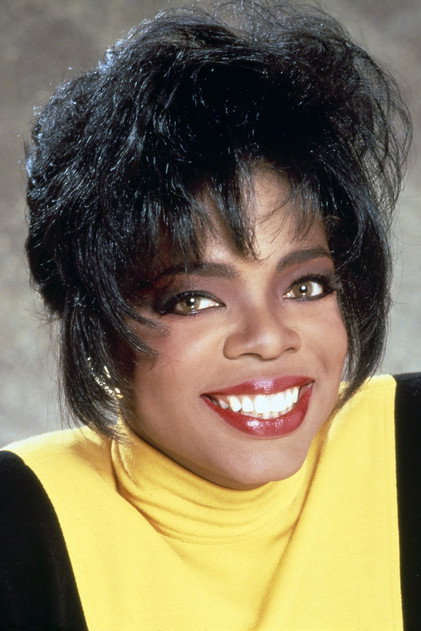
3 of the 10 billed cast had never appeared on screen; Whoopi Goldberg won the Globe for this film.




Crew
Directed by
Written by
Cinematography
Edited by
Music by
Produced by
More like this
What are movies like The Color Purple?
Movies like The Color Purple include The Color Purple (2023), East of Eden (1955) and The Man in the Moon (1991). Of the 12 closest matches, most are liberation stories, and most are films set in the American South.
- The Color PurplePeople:
- East of EdenSubject:
- The Man in the MoonSubject:
- The Secret Life of BeesReception:
- Day of the FalconPeople:
- Live and BecomeStory type:
- What's Eating Gilbert GrapeReception:
- The Great DebatersCharacters:
- Ladies in LavenderStory type:
- The Miracle WorkerFeel:
- The Secret: Dare to DreamCharacters:
- Where the Crawdads SingStory type:



Why this pick
Explore by
What else shares a premise, people or place with The Color Purple?
7K other films share the rarest tag below, relationship: found family. Each tag opens Browse with the films that share it.