
Star Wars: Episode VII - The Force Awakens
Every generation has a story.
- Director
- J.J. Abrams
- Starring
- Daisy Ridley, John Boyega, Oscar Isaac, Adam Driver
Thirty years after defeating the Galactic Empire, Han Solo and his allies face a new threat from the evil Kylo Ren and his army of Stormtroopers.
Where to watch
Where can I watch Star Wars: Episode VII - The Force Awakens?
As of October 24, 2026, MovieCove lists Star Wars: Episode VII - The Force Awakens streaming on Disney+ and STARZ and to rent or buy on Apple TV and Prime Video.
Subscription


Your rating, lists and review
Highlights
What stands out about Star Wars: Episode VII - The Force Awakens?
Star Wars: Episode VII - The Force Awakens earns 8 badges, led by Universally Loved and Top 10% in Action.
- Universally Loved, Reception badge.80% rated it 7 or higher
- Top 10% in Action, Rank badge.94th percentile among Action films
- Awards magnet, Awards and box office badge.27 wins and 70 more nominations
- Spectacle, Craft and mood badge.Praised by fans (90) and detractors (70)
- Box Office Hit, Awards and box office badge.Returned 8.5× its budget
- Before they were famous, Cast badge.Daisy Ridley and Lupita Nyong'o: newcomer then, star now
- Hopeful, Craft and mood badge.Leaves you hopeful
- Big Budget, Awards and box office badge.$245M budget
- Rank
- Reception
- Craft and mood
- Awards and box office
- Cast
Reception
Is Star Wars: Episode VII - The Force Awakens worth watching?
Star Wars: Episode VII - The Force Awakens' Midcredits score is the 89th percentile of all films, from 3.1M ratings across 6 sources. 80% liked it (rated it 7 or higher out of 10).
Midcredits score
89th percentile
Better received than 89% of films
72 /100
84th percentile of all films
Critics 80 · Audience 71
Rating distribution
votes at each rating level (1–10)
Most people land high, with a thin tail of low scores from those it didn't reach.
80% liked it
90th percentile of all films
Critics 93% · Audience 84%
Awards
0 Oscars won · 5 Oscar noms · 27 wins / 70 noms overall
- NominatedAcademy Awards· Best Achievement in Film Editing
- NominatedAcademy Awards· Best Achievement in Music Written for Motion Pictures, Original Score
82nd percentile
3.1M ratings across platforms
Box office
Returned 8.5× its budget — 99th percentile earner in its genre.
What reviewers say
Common ground
Both camps agree the film is a deliberate homage to the original trilogy that prioritizes nostalgia and familiar story beats over bold originality.
Fans praised
- engaging new leads Rey and Finn with strong chemistry
- practical effects and tactile production design restore the original trilogy's gritty feel
- Kylo Ren as a complex, emotionally raw villain with a compelling internal conflict
Detractors panned
- slavish plot rehash of A New Hope with recycled Death Star climax
- Rey's instant Jedi mastery with no training breaks established lore
- thin character development and reliance on nostalgia over fresh ideas
What stands out
superb blend of practical and CGI effects; dogfights and set pieces are thrilling
Daisy Ridley and John Boyega are praised as charismatic discoveries; some detractors find performances wooden or overacted
immersive world-building with a tactile, lived-in feel; detractors sense a hollow, theme-park veneer
fast-paced and never boring; some detractors find it breathless and frenetic
nostalgia-driven catharsis for fans; detractors feel emotionally manipulated by hollow spectacle
Rey and Finn are instantly likable but lack depth; Kylo Ren is complex, yet detractors call him a whiny, underdeveloped tantrum-thrower
mirrors A New Hope beat-for-beat with Starkiller Base as a third Death Star; praised as a safe restart, panned as creatively bankrupt
derivative retread of original trilogy; fans call it a respectful homage, detractors call it a shameless copy
Preferred by
No notable difference between any of the groups: each pair ranks it within 10 percentile points.
- Women vs men 2 points apart
- Under-30s vs over-30s 5 points apart
- Critics vs users 9 points apart
- US vs non-US 1 point apart
Watch experience
What is Star Wars: Episode VII - The Force Awakens like to watch?
Watch this when you want a fun ride.
What it asks of you
Nothing out of the ordinary.
What it feels like
Fun ride.
How it leaves you
Hopeful.
Story archetype
Every story archetype, clockwise from the top
- Monster 21%: Predator 6% · Tyrant 6% · Invasion 2% · Oppressive state 2% · Corporate villainy 1% · Institutional injustice 1% · Class system under 1% · Technology turns under 1% · Inner demon 1%
- Rags 3%: Underdog triumph 2% · Social ascent under 1% · Fame and fortune under 1% · Rise and fall under 1% · Hidden worth revealed under 1%
- Quest 10% (this title): Treasure hunt 1% · Rescue 4% · Mission 5% (this title) · Journey home under 1% · Pilgrimage 1%
- Voyage 4%: Portal fantasy under 1% · Fish out of water 2% · Survival ordeal 1% · Time displacement under 1% · Descent 1%
- Comedy 11%: Romantic comedy 4% · Comedy of errors 3% · Farce 2% · Buddy comedy 1% · Comedy of manners 1%
- Tragedy 9%: Hubris 1% · Obsession 2% · Corruption arc 2% · Doomed love 2% · Crushed by fate 3%
- Rebirth 13%: Redemption 3% · Healing 5% · Liberation 2% · Second chance 2%
- Mystery 7%: Puzzle 1% · Investigation 5% · Enigma 2%
- No archetype 22%
What it's about
Every theme, clockwise from the top
- Bonds 27%: Romantic love 15% · Marriage 2% · Family bonds 21% (this title) · Parenthood 2% · Friendship 9% · Loyalty 4%
- Self 22% (this title): Identity 14% (this title) · Coming of age 5% · Aging under 1% · Self-worth 7% · Ambition 7% · Purpose 9% · Memory 3% · Obsession 3%
- Power 7%: Power 2% · Corruption 3% · Greed 3% · Class 3% · Oppression 4% · Freedom 5%
- Morality 16%: Justice 13% · Duty 2% · Revenge 4% · Guilt 3% · Redemption 6% (this title) · Forgiveness 1% · Sacrifice 4% · Betrayal 5% · Deception 9%
- Survival 15%: Survival 17% · War 1% · Violence 4% · Mortality 2% · Grief 6% · Trauma 7% · Mental illness 1% · Addiction 1% · Illness and disability under 1%
- Society 9%: Community 14% · Isolation 5% · Prejudice 3% · Displacement 1% · Faith 3% · Tradition vs change 2% · Fame 3% · Legacy 4%
- Ideas 5%: Fate 1% · Free will under 1% · Truth 4% · Hope 5% · Nature 2% · Art 4% · Technology 1%
The world
Content guide
Is Star Wars: Episode VII - The Force Awakens okay for kids?
PG-13Star Wars: Episode VII - The Force Awakens is rated PG-13: “Rated PG-13 for sci-fi action violence” (MPAA). As of August 19, 2026, Midcredits content scores put its violence at moderate (59/100), sexual content at minimal (6/100), language at mild (24/100), drug and alcohol content at minimal (14/100) and frightening material at moderate (53/100). Overall it is heavier than 46% of PG-13-rated films.
Ratings in 46 other countriesRatings elsewhere
- UK12A
- CanadaPG
- AustraliaM
- Germany12
- FranceTP
- Ireland12A
- New ZealandM
- JapanG
- South Korea12
- Brazil12
- Argentina+13
- Austria12
- Belgium12
- BGC
- CLTE+7
- Czechia12+
- Denmark11
- FinlandK-12
- GreeceK12
- Hong KongIIA
- Hungary12
- IDSU
- IndiaU
- IS9
- IsraelAll
- ItalyT
- LTN-13
- MexicoB
- MOB
- Netherlands12
- Norway12
- PhilippinesPG
- Poland12
- PortugalM/12
- RO12
- Russia12+
- SingaporePG
- SK12
- South Africa13
- Spain7
- Sweden11
- Switzerland12
- Taiwan0+
- TH13
- Türkiye13A
- UA12+
Point along a line to see a well-known title at that level.
Nothing here is extreme. The strongest element is violence, heavier than 69% of PG-13-rated films.
Source: Midcredits content scores, 0 (none) to 100 (severe) per category, with each standing ranked against other films that have them.
What content warnings does Star Wars: Episode VII - The Force Awakens have?
MovieCove's classifier found 6 depicted content warnings in Star Wars: Episode VII - The Force Awakens: Gun violence (moderate), Kidnapping or confinement (moderate), Torture (moderate), plus 3 withheld here because they would spoil the plot. Each is backed by a verbatim quote from the parents' guide notes; a missing warning is not a guarantee of absence.
Cast and crew
Who is in Star Wars: Episode VII - The Force Awakens?
Cast
3 of the cast already had the standing of a top-10% working actor.





Crew
Directed by
Written by
Cinematography
Edited by
Music by
Produced by
More like this
What are movies like Star Wars: Episode VII - The Force Awakens?
Movies like Star Wars: Episode VII - The Force Awakens include Star Wars: Episode VIII - The Last Jedi (2017), Star Wars: Episode V - The Empire Strikes Back (1980) and Star Trek Into Darkness (2013). Of the 12 closest matches, two are films by J.J. Abrams, and most are films set aboard a spacecraft.
- Star Wars: Episode VIII - The Last JediPeople:
- Star Wars: Episode V - The Empire Strikes BackPeople:
- Star Trek Into DarknessPeople:
- Star Trek: NemesisReception:
- Rebel Moon - Part One: A Child of FireStory type:
- Star Trek BeyondReception:
- SkylinesStory type:
- Super 8People:
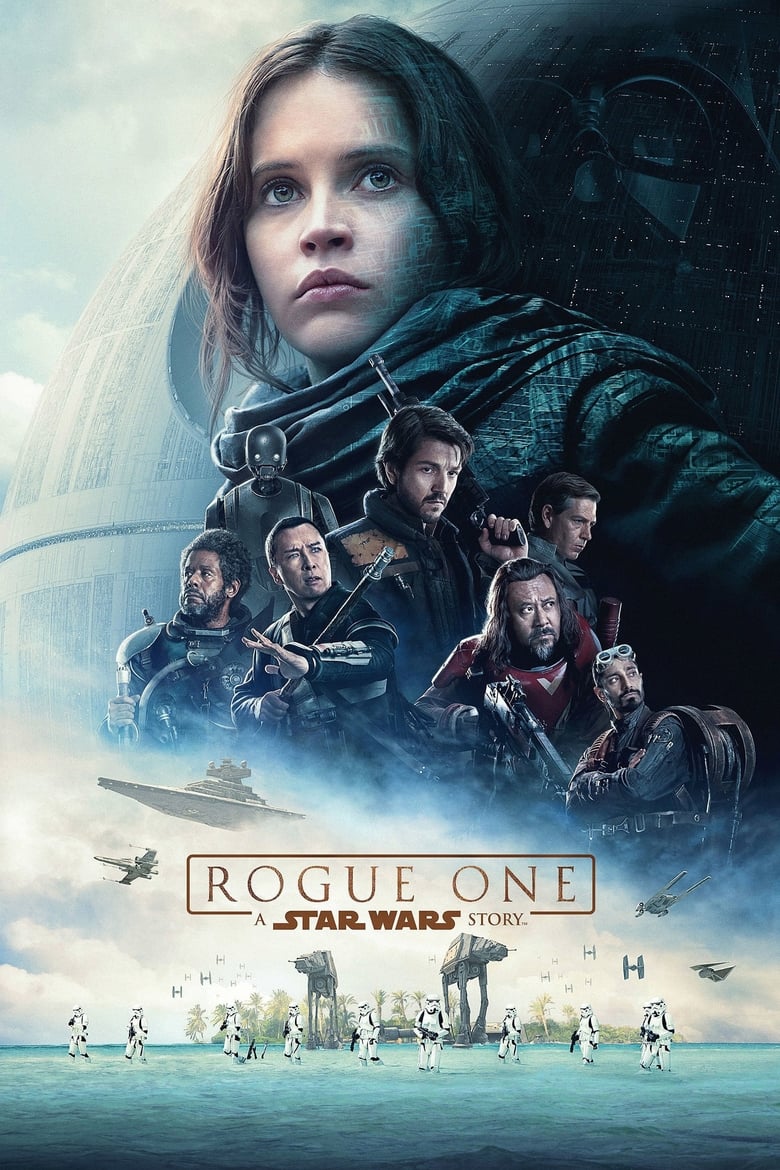
- Rogue One: A Star Wars StoryFeel:
- John CarterFeel:
- Solo: A Star Wars StoryPeople:
- Lost in SpaceFeel:




Why this pick
Explore by
What else shares a premise, people or place with Star Wars: Episode VII - The Force Awakens?
263 other films share the rarest tag below, kind of film: space opera. Each tag opens Browse with the films that share it.