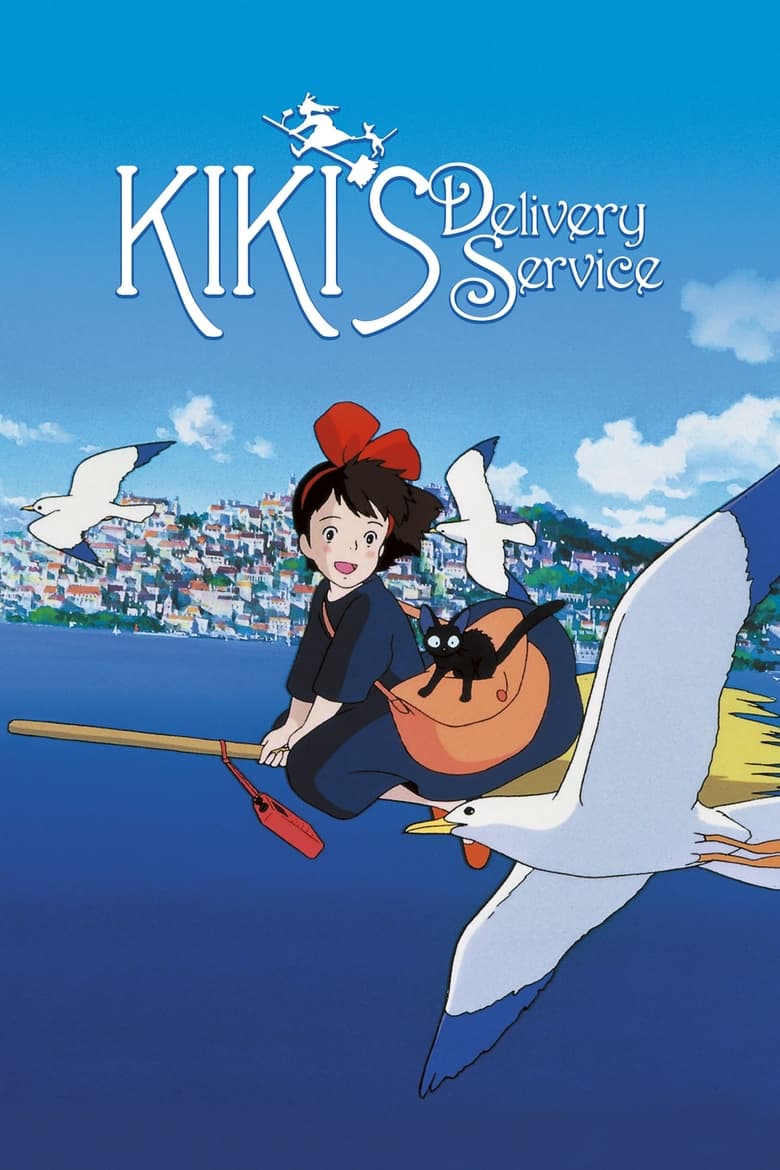
Kiki's Delivery Service
I was feeling blue, but I'm better now.
- Director
- Hayao Miyazaki
- Starring
- Minami Takayama, Rei Sakuma, Kappei Yamaguchi, Keiko Toda
A young witch, on her mandatory year of independent life, finds fitting into a new community difficult while she supports herself by running an air courier service.
Where to watch
Where can I watch Kiki's Delivery Service?
As of October 24, 2026, MovieCove lists Kiki's Delivery Service streaming on HBO Max and to rent or buy on Prime Video.
Subscription


Rent / Buy


Your rating, lists and review
Highlights
What stands out about Kiki's Delivery Service?
Kiki's Delivery Service earns 12 badges, led by Top 1% of films and Stood the test of time.
- Top 1% of films, Rank badge.99th percentile Midcredits score
- Stood the test of time, Reception badge.99th percentile Midcredits score, 37 years on
- Universally Loved, Reception badge.90% rated it 7 or higher
- Visual feast, Craft and mood badge.Praised by fans (90) and detractors (70)
- Atmospheric, Craft and mood badge.Reviews score it 85 of 100
- Family friendly, Content badge.In the lightest quarter of films on all 5 categories
- Award Winner, Awards and box office badge.3 wins
- Breakout role, Cast badge.Breakouts for Minami Takayama and Rei Sakuma
Show 4 moreShow fewer
- Cultural touchstone, Reception badge.Among the most-seen films, 1.5M ratings
- Before they were famous, Cast badge.Kappei Yamaguchi and Kôichi Yamadera: newcomer then, star now
- Feel-good, Craft and mood badge.Leaves you feeling good
- Gentle for a G-rated film, Content badge.Heavier than only 1% of G-rated films
- Rank
- Reception
- Craft and mood
- Awards and box office
- Content
- Cast
Reception
Is Kiki's Delivery Service worth watching?
Kiki's Delivery Service's Midcredits score is the 99th percentile of all films, from 1.5M ratings across 6 sources. 90% liked it (rated it 7 or higher out of 10).
Midcredits score
99th percentile
Better received than 99% of films
81 /100
97th percentile of all films
Critics 85 · Audience 81
Rating distribution
votes at each rating level (1–10)
A tight consensus around 8.0 — people broadly agree on this one.
90% liked it
98th percentile of all films
Awards
0 Oscars won · 0 Oscar noms · 3 wins / 0 noms overall
Reach
99th percentile
1.5M ratings across platforms
Box office
In Japanese yen, not converted to dollars.
70th percentile earner in its genre.
What reviewers say
Common ground
A gentle, low-conflict coming-of-age film with beautiful animation and a focus on everyday life.
Fans praised
- Beautiful, hand-drawn animation with rich detail
- Heartfelt coming-of-age story about independence and self-belief
- Charming, wholesome tone with no villain and uplifting message
Detractors panned
- Plotless and boring with no real conflict or stakes
- Thin, episodic script that meanders without narrative drive
- Protagonist is unlikable and character development is weak
What stands out
Lush hand-drawn backgrounds, stunning aerial views, rich color palette
Cozy, sun-drenched seaside town feels alive and inviting
Joe Hisaishi's score is warm and evocative; some prefer original Japanese audio over English dub changes
Resonates with themes of self-doubt, burnout, and finding purpose
English dub praised for Kirsten Dunst and Phil Hartman; some critics find dubbing grating
Kiki is relatable and charming in her struggles; detractors find her and supporting cast flat and underdeveloped
Leisurely and meditative; fans find it calming, detractors find it sluggish
Simple, episodic slice-of-life story; fans call it charmingly low-stakes, detractors call it boring
Preferred by
No notable difference between any of the groups: each pair ranks it within 10 percentile points.
- Women vs men 1 point apart
- Under-30s vs over-30s even
- Critics vs users 2 points apart
- US vs non-US 1 point apart
Watch experience
What is Kiki's Delivery Service like to watch?
Watch this when you want something warm that leaves you smiling.
What it asks of you
Patience.
What it feels like
Feel-good.
How it leaves you
Feeling good.
Story archetype
Every story archetype, clockwise from the top
- Monster 21%: Predator 6% · Tyrant 6% · Invasion 2% · Oppressive state 2% · Corporate villainy 1% · Institutional injustice 1% · Class system under 1% · Technology turns under 1% · Inner demon 1%
- Rags 3%: Underdog triumph 2% · Social ascent under 1% · Fame and fortune under 1% · Rise and fall under 1% · Hidden worth revealed under 1%
- Quest 10%: Treasure hunt 1% · Rescue 4% · Mission 5% · Journey home under 1% · Pilgrimage 1%
- Voyage 4% (this title): Portal fantasy under 1% · Fish out of water 2% (this title) · Survival ordeal 1% · Time displacement under 1% · Descent 1%
- Comedy 11%: Romantic comedy 4% · Comedy of errors 3% · Farce 2% · Buddy comedy 1% · Comedy of manners 1%
- Tragedy 9%: Hubris 1% · Obsession 2% · Corruption arc 2% · Doomed love 2% · Crushed by fate 3%
- Rebirth 13%: Redemption 3% · Healing 5% · Liberation 2% · Second chance 2%
- Mystery 7%: Puzzle 1% · Investigation 5% · Enigma 2%
- No archetype 22%
What it's about
Every theme, clockwise from the top
- Bonds 27%: Romantic love 15% · Marriage 2% · Family bonds 21% · Parenthood 2% · Friendship 9% · Loyalty 4%
- Self 22% (this title): Identity 14% · Coming of age 5% (this title) · Aging under 1% · Self-worth 7% (this title) · Ambition 7% · Purpose 9% · Memory 3% · Obsession 3%
- Power 7%: Power 2% · Corruption 3% · Greed 3% · Class 3% · Oppression 4% · Freedom 5%
- Morality 16%: Justice 13% · Duty 2% · Revenge 4% · Guilt 3% · Redemption 6% · Forgiveness 1% · Sacrifice 4% · Betrayal 5% · Deception 9%
- Survival 15%: Survival 17% · War 1% · Violence 4% · Mortality 2% · Grief 6% · Trauma 7% · Mental illness 1% · Addiction 1% · Illness and disability under 1%
- Society 9%: Community 14% (this title) · Isolation 5% · Prejudice 3% · Displacement 1% · Faith 3% · Tradition vs change 2% · Fame 3% · Legacy 4%
- Ideas 5%: Fate 1% · Free will under 1% · Truth 4% · Hope 5% · Nature 2% · Art 4% · Technology 1%
The world
Content guide
Is Kiki's Delivery Service okay for kids?
GKiki's Delivery Service is rated G. As of October 3, 2026, Midcredits content scores put its violence at minimal (4/100), sexual content at minimal (9/100), language at minimal (2/100), drug and alcohol content at minimal (0/100) and frightening material at minimal (14/100). Overall it is heavier than 1% of G-rated films.
Ratings in 20 other countriesRatings elsewhere
- UKU
- CanadaG
- AustraliaG
- Germany0
- FranceTP
- JapanG
- South KoreaALL
- BrazilL
- Hong KongI
- ItalyT
- MexicoA
- NetherlandsAL
- NorwayA
- Poland7
- PRG
- Russia6+
- SpainAPTA
- SwedenBtl
- Switzerland12
- Taiwan普遍級
Point along a line to see a well-known title at that level.
Nothing here is extreme. The strongest element is frightening material, heavier than 10% of G-rated films.
Source: Midcredits content scores, 0 (none) to 100 (severe) per category, with each standing ranked against other films that have them.
What content warnings does Kiki's Delivery Service have?
Not screened for content warnings yet.
Cast and crew
Who is in Kiki's Delivery Service?
Cast


Crew
Directed by
Written by
Cinematography
Edited by
Music by
Produced by
More like this
What are movies like Kiki's Delivery Service?
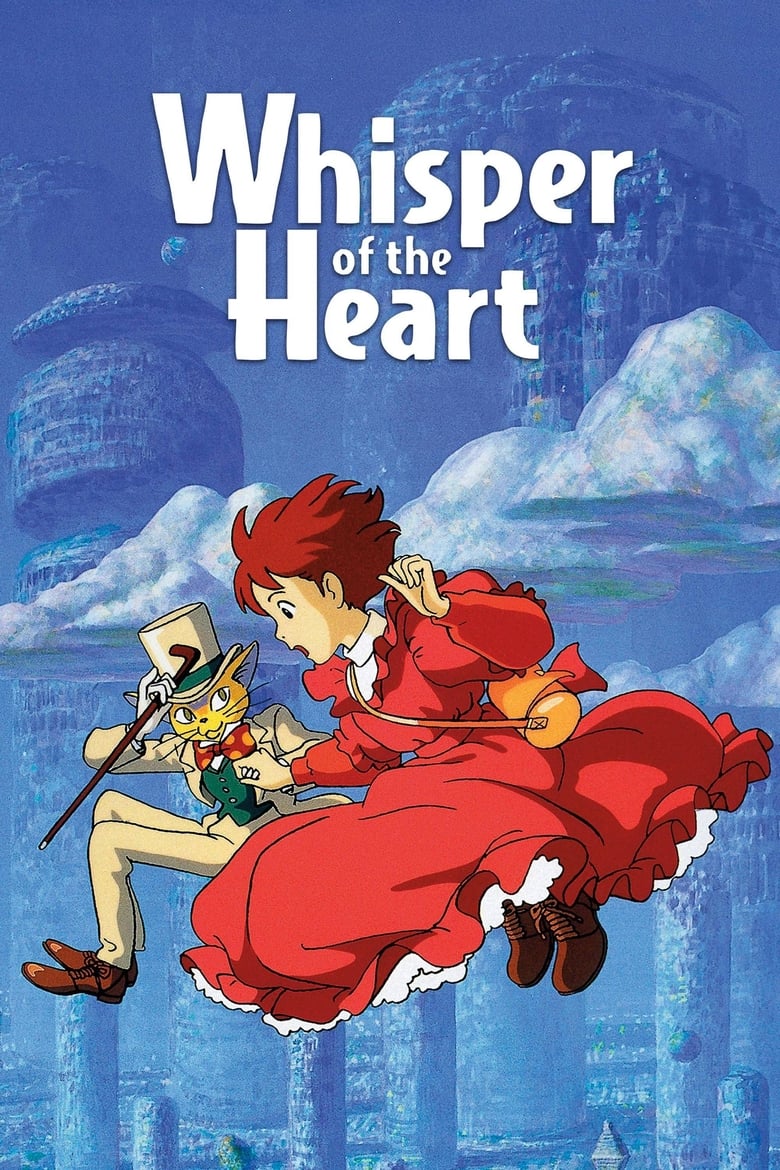
Movies like Kiki's Delivery Service include Howl's Moving Castle (2004), Spirited Away (2001) and Whisper of the Heart (1995). Of the 12 closest matches, several are stories about witches, and half are films set in a fictional world.
- Howl's Moving CastleReception:
- Spirited AwaySubject:
- Whisper of the HeartPeople:
- Porco RossoReception:
- Thunder and the House of MagicSubject:
- The Cat ReturnsPeople:
- Children Who Chase Lost VoicesSubject:
- PAW Patrol: The MovieWorld:
- Big Fish & BegoniaWorld:
- Mary and the Witch's FlowerCharacters:
- Peter Pan & WendyStory type:
- The Pinchcliffe Grand PrixCharacters:










Why this pick
Explore by
What else shares a premise, people or place with Kiki's Delivery Service?
312 other films share the rarest tag below, follows: magic user. Each tag opens Browse with the films that share it.