
Freud's Last Session
September 3, 1939. The world is on the brink. A monumental session with two of the greatest minds of the twentieth century over the future of mankind and the existence of God.
- Director
- Matt Brown
- Starring
- Anthony Hopkins, Matthew Goode, Liv Lisa Fries, Jodi Balfour
On the eve of the Second World War, two of the greatest minds of the twentieth century, C.S. Lewis and Sigmund Freud converge for their own personal battle over the existence of God. The film interweaves the lives of Freud and Lewis, past, present, and through fantasy, bursting from the confines of Freud’s study on a dynamic journey.
Where to watch
Where can I watch Freud's Last Session?
As of October 24, 2026, MovieCove lists Freud's Last Session streaming on Hulu and to rent or buy on Prime Video.
Subscription


Rent / Buy


Your rating, lists and review
Highlights
What stands out about Freud's Last Session?
Freud's Last Session earns 4 badges, led by Box Office Flop and Nonlinear.
- Box Office Flop, Awards and box office badge.Grossed 41% of its budget
- Nonlinear, Craft and mood badge.Told out of order
- Broadly Agreed, Reception badge.45% rated it 7 or higher
- Award Nominee, Awards and box office badge.1 nomination
- Reception
- Craft and mood
- Awards and box office
Reception
Is Freud's Last Session worth watching?
Freud's Last Session's Midcredits score is the 45th percentile of all films, from 29K ratings across 6 sources. 45% liked it (rated it 7 or higher out of 10).
Midcredits score
45th percentile
Better received than 45% of films
60 /100
45th percentile of all films
Critics 48 · Audience 61
Rating distribution
votes at each rating level (1–10)
A broad spread centered near 6.3 — solid but not unanimous.
45% liked it
45th percentile of all films
Critics 43% · Audience 66%
Awards
0 Oscars won · 0 Oscar noms · 0 wins / 1 noms overall
85th percentile
29K ratings across platforms
Box office
77th percentile earner in its genre.
What reviewers say
Common ground
Both camps agree the film is a talky, stage-y two-hander with strong lead performances but a script that never fully delivers on its promising premise.
Fans praised
- Hopkins and Goode carry the film with magnetic performances
- intellectually stimulating debate on faith and reason
- thought-provoking philosophical content for mature audiences
Detractors panned
- flat, uninspired script fails to deliver real argument or depth
- clumsy flashbacks and Anna Freud subplot distract from the core debate
- stagy execution with pedestrian direction and dull pacing
What stands out
Hopkins and Goode praised as compelling; detractors call Hopkins mannered or miscast
handsomely mounted period look but visually uninspired
witty in spots but overall flat and lacking penetrating insight
Freud and Lewis feel like caricatures rather than fully realized people
moments of pathos undercut by intellectual detachment and shallow character work
meandering structure with forced interruptions and subplots
sluggish and repetitive; flashbacks and side plots break momentum
familiar atheist-vs-believer debate without fresh perspectives
Preferred by
No notable difference between any of the groups: each pair ranks it within 10 percentile points.
- Women vs men 3 points apart
- Critics vs users 1 point apart
- US vs non-US 4 points apart
Watch experience
What is Freud's Last Session like to watch?
Watch this when you can give it your full attention, and you want something to think about afterwards.
What it asks of you
Your full attention, patience and a taste for open questions.
What it feels like
Food for thought.
How it leaves you
Thinking.
Story archetype
Every story archetype, clockwise from the top
- Monster 21%: Predator 6% · Tyrant 6% · Invasion 2% · Oppressive state 2% · Corporate villainy 1% · Institutional injustice 1% · Class system under 1% · Technology turns under 1% · Inner demon 1%
- Rags 3%: Underdog triumph 2% · Social ascent under 1% · Fame and fortune under 1% · Rise and fall under 1% · Hidden worth revealed under 1%
- Quest 10%: Treasure hunt 1% · Rescue 4% · Mission 5% · Journey home under 1% · Pilgrimage 1%
- Voyage 4%: Portal fantasy under 1% · Fish out of water 2% · Survival ordeal 1% · Time displacement under 1% · Descent 1%
- Comedy 11%: Romantic comedy 4% · Comedy of errors 3% · Farce 2% · Buddy comedy 1% · Comedy of manners 1%
- Tragedy 9%: Hubris 1% · Obsession 2% · Corruption arc 2% · Doomed love 2% · Crushed by fate 3%
- Rebirth 13%: Redemption 3% · Healing 5% · Liberation 2% · Second chance 2%
- Mystery 7%: Puzzle 1% · Investigation 5% · Enigma 2%
- No archetype 22% (this title)
What it's about
Every theme, clockwise from the top
- Bonds 27%: Romantic love 15% · Marriage 2% · Family bonds 21% · Parenthood 2% · Friendship 9% · Loyalty 4%
- Self 22%: Identity 14% · Coming of age 5% · Aging under 1% · Self-worth 7% · Ambition 7% · Purpose 9% · Memory 3% · Obsession 3%
- Power 7%: Power 2% · Corruption 3% · Greed 3% · Class 3% · Oppression 4% · Freedom 5%
- Morality 16%: Justice 13% · Duty 2% · Revenge 4% · Guilt 3% · Redemption 6% · Forgiveness 1% · Sacrifice 4% · Betrayal 5% · Deception 9%
- Survival 15%: Survival 17% · War 1% · Violence 4% · Mortality 2% (this title) · Grief 6% · Trauma 7% · Mental illness 1% · Addiction 1% · Illness and disability under 1%
- Society 9% (this title): Community 14% · Isolation 5% · Prejudice 3% · Displacement 1% · Faith 3% (this title) · Tradition vs change 2% · Fame 3% · Legacy 4%
- Ideas 5%: Fate 1% · Free will under 1% · Truth 4% · Hope 5% · Nature 2% · Art 4% · Technology 1%
The world
Content guide
Is Freud's Last Session okay for kids?
PG-13Freud's Last Session is rated PG-13: “Rated PG-13 for thematic material, some bloody/violent images, sexual material and smoking” (MPAA). As of August 19, 2026, Midcredits content scores put its violence at moderate (41/100), sexual content at moderate (43/100), language at moderate (41/100), drug and alcohol content at moderate (58/100) and frightening material at mild (29/100). Its violence, language, drug and alcohol content and frightening material have too few votes to rank.
Ratings in 12 other countriesRatings elsewhere
- UK12A
- AustraliaM
- Germany12
- New ZealandM
- South Korea15
- Brazil14
- LTN-13
- PortugalM/12
- PRPG-13
- RO15
- Russia18+
- Spain12
Point along a line to see a well-known title at that level.
Too few votes to rank this title overall (48 votes across 5 categories; ranking needs 10 in at least three).
Source: Midcredits content scores, 0 (none) to 100 (severe) per category, with each standing ranked against other films that have them.
What content warnings does Freud's Last Session have?
MovieCove's classifier found 6 depicted content warnings in Freud's Last Session: Addiction or relapse (moderate), Gore or body horror (moderate), Medical procedures (moderate), Incest (mild), plus 2 withheld here because they would spoil the plot. Each is backed by a verbatim quote from the parents' guide notes; a missing warning is not a guarantee of absence.
Cast and crew
Who is in Freud's Last Session?
Cast
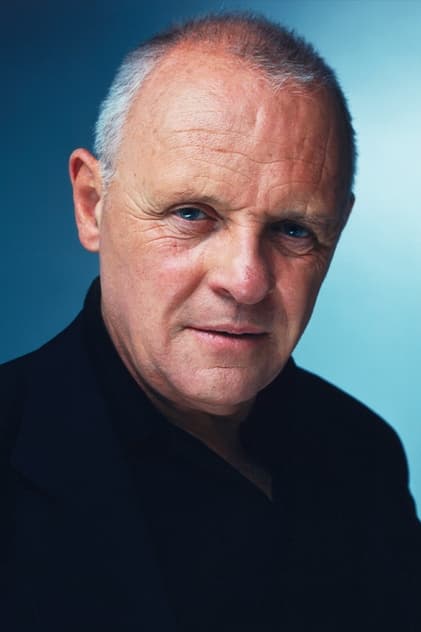
2 of the cast already had the standing of a top-10% working actor.





Crew
Directed by
Produced by
+56 more
, Meg Thomson, Kayvan Mashayekh, Manuela Noble, Robert Stillman, Jia Honglin, Morwin Schmookler, Rachel Damiani, Rick Nicita, Huw Penallt Jones, Tyler Neenan, Aoife O'Sullivan, Yuan Yang Shen, Ryan Klevens, Peter J. Campagna, Jeffrey M. Silverman, Nina Goldvin, Zarmin Noon Sekhon, Kevin Matusow, Paul Doyle, Matt Murphie, Michael Li, Patrick McGeehin, David Shrier, Mark Foligno, Enzo Zelocchi, Rock Jacobs, Norman Merry, Peter Hampden, Natalie Marciano, Margarethe Baillou, John L. Pitts, Maya Amsellem, Sinead Barry, Jonathan Evans, Tom George, Charles Dorfman, Lee Broda, Andrea Bucko, Alla Belaya, Camilla Borghesani, Natalya Tsvetkova, Manraj S. Sekhon, Marlon Vogelgesang, Craig Ryan, Dean Owen-Sims, Jonathan Gorner, Mitchell Hoog, Vladyslav Riashyn, Chris K. Daniels, J.D. Zacharias, Mary Aloe, Matt Brown, Robert A. Daly Jr., Niamh Fagan, Nadezhda Gorshkova, Alan GreismanMore like this
What are movies like Freud's Last Session?
Movies like Freud's Last Session include Rebel in the Rye (2017), Operation Mincemeat (2021) and Creation (2009). Of the 12 closest matches, several are films set during World War II, and all are period dramas.


Explore by
What else shares a premise, people or place with Freud's Last Session?
2.2K other films share the rarest tag below, follows: scientist. Each tag opens Browse with the films that share it.